The Biggest Suppressed Fact About Saunière
By The Believers
22 August 2026
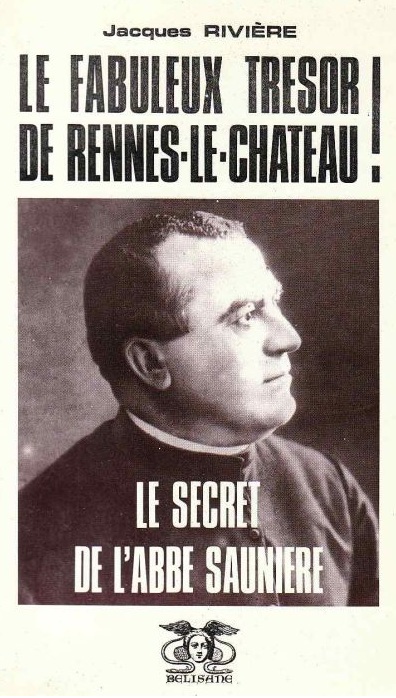
The Biggest Suppressed Fact the Believers are guilty of is of course Saunière's Ecclesiastical Trial of 1910-1911. This is either misunderstood at best, or misrepresented at worst. There is a Statement in a letter dated 8 April 1911 by Saunière that only demonstrates he wanted to keep his acts of trafficking of masses A SECRET from the Trial and to “keep it all under his bed” – he refused to show it at his Trial, and instead produced a fabricated “list of Donors” that Jacques Riviere claimed was in the handwriting of Saunière's Lawyer, in his book, “Le Fabuleux Trésor de Rennes-le-Château: Le Secret de l'Abbé Saunière” (Éditions Bélisane, 1983).
From Bérenger Saunière's letter dated 8 April 1911:
“You are aware of Rome’s first decision. Does it refer anywhere to the keeping of accounts? Not at all”.
Bérenger Saunière’s 61 Invoices, as found in Jacques Riviere's book.
Bérenger Saunière’s fraudulent “Lists of Donors” to divert attention away from his trafficking in masses activities, 25 March 1911.
Bérenger Saunière’s Statement of Expenditure, dated 14 July 1911.
Veering totally away from the subject matter of Rennes-le-Château and to the subject matter of Pierre Plantard, it is truly amazing how Jewish people ignore the anti-semitism of Pierre Plantard just because they have become SPELLBOUND by his Mythomania, and to claim he had “Left-Wing origins”. This is truly remarkable.
Perhaps Plantard's claim to have Jewish Associates during HIS Paris-based “Central Committee of Public Safety” mimicking the genuine military Committees of Public Safety formed in Algiers, even using the alias “Captain Way” to tie his group to the Algerian coup events. Perhaps because this was only because the Jewish People were one of the biggest supporters of the Committees of Public Safety. Operating from Paris under the pseudonym “Captain Way,” Plantard claimed his self-styled committee was an extension of General Jacques Massu's real Committee of Public Safety in Algiers. General De Gaulle never endorsed Plantard's phantom committee or the other unauthorized civilian groups. De Gaulle eventually moved toward self-determination and Algerian independence in 1962.
The historic self-determination referendum for Algerian independence took place on 1 July 1962, following the signing of the Évian Accords. Voters overwhelmingly chose independence, leading to France's formal recognition on 3 July and Algeria's official declaration of independence on 5 July 1962.
|