Isaac Asimov Teaching Us About
Priory of Sion & Rennes-le-Château
4 May 2026
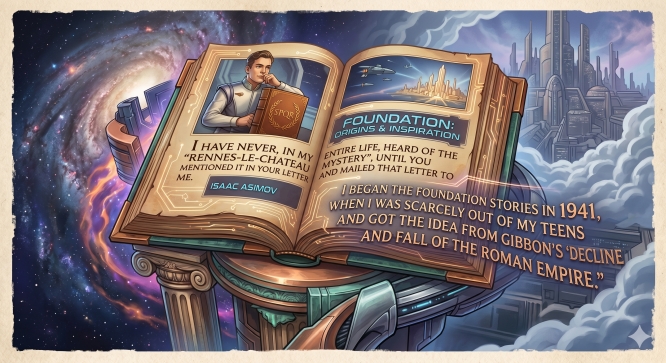
Isaac Asimov’s Foundation Trilogy
AI Overview
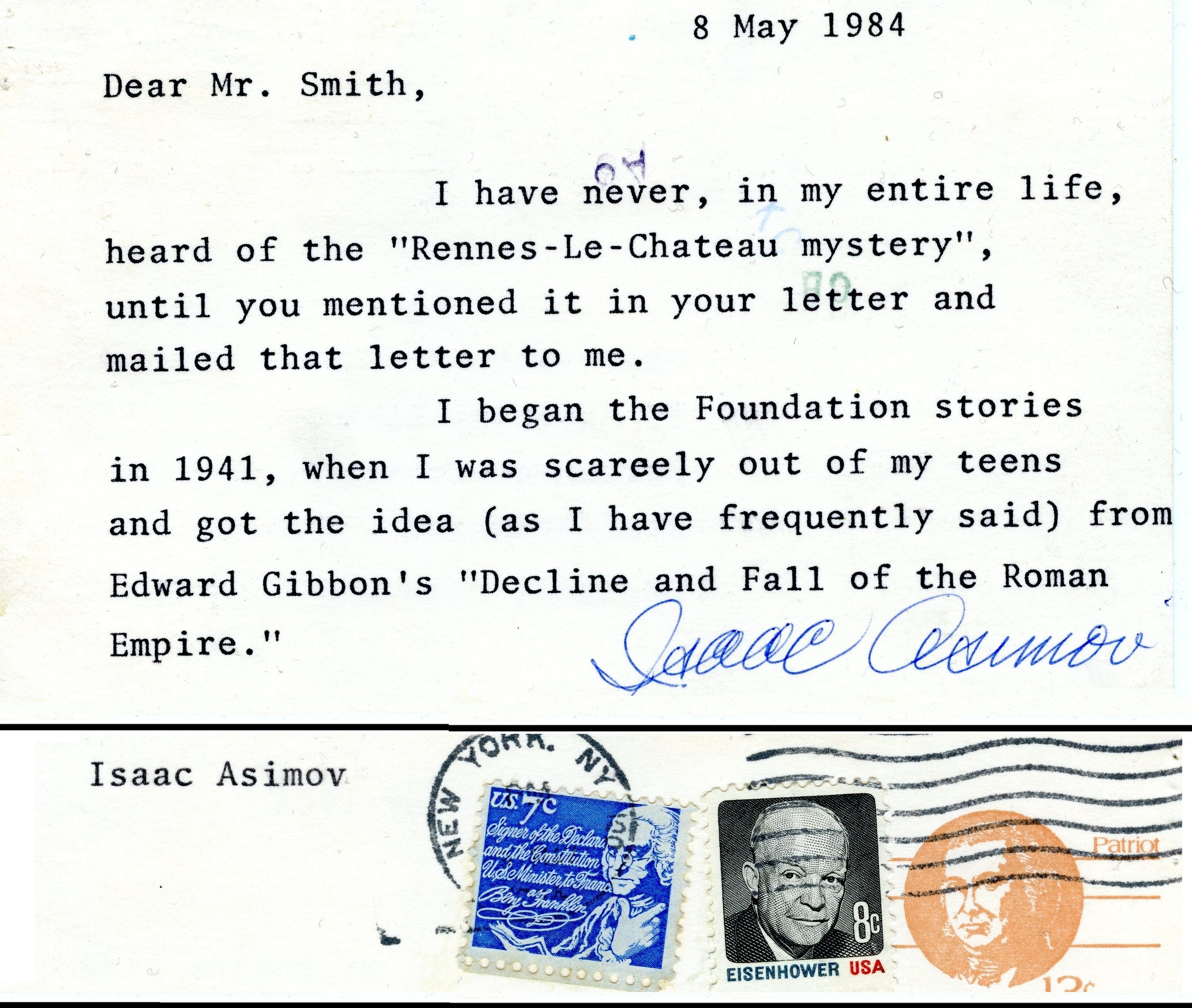
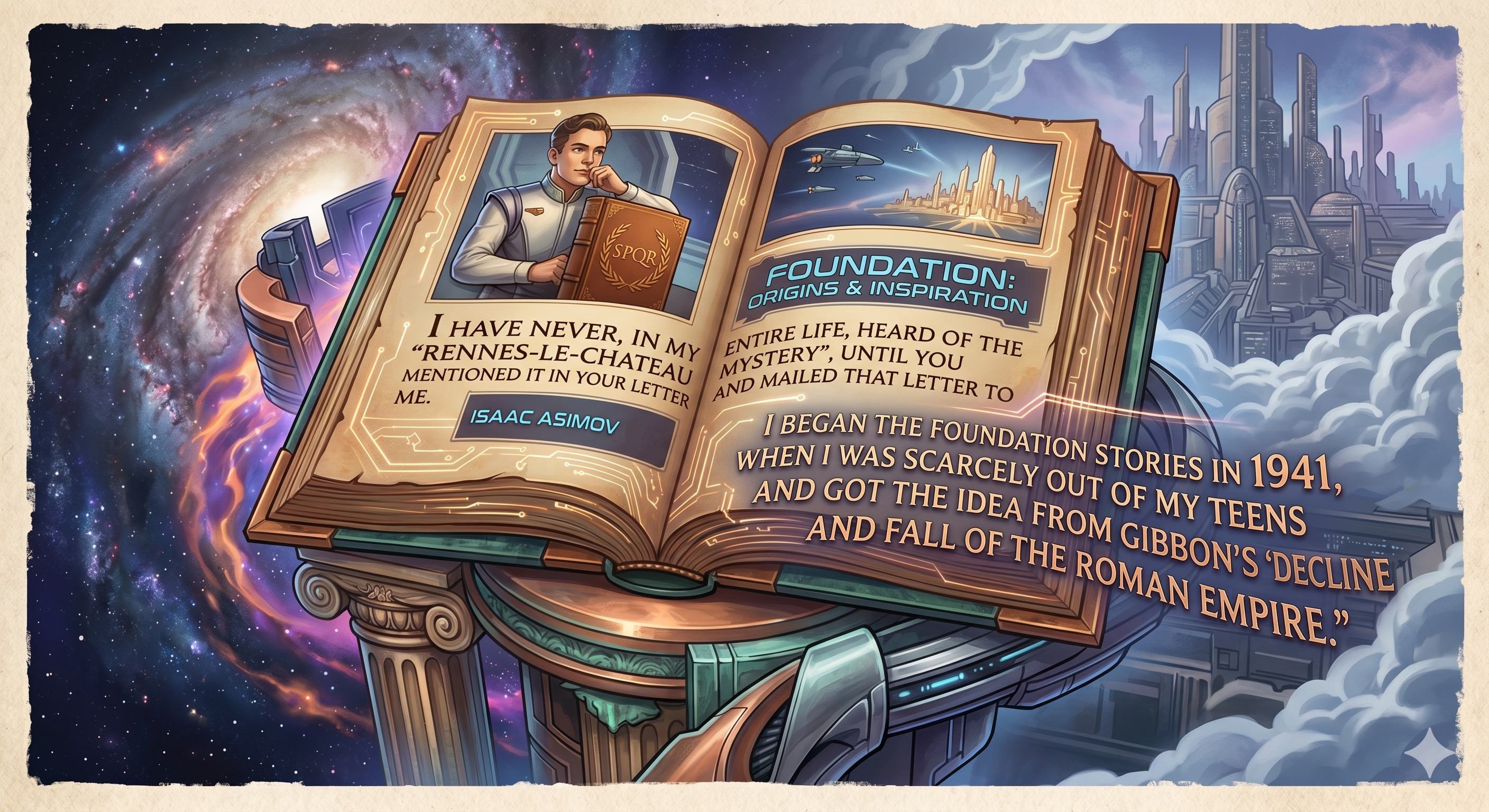
Yes, Isaac Asimov explicitly modeled the “Foundation Trilogy” (1942-1950) on Edward Gibbon's “The History of the Decline and Fall of the Roman Empire”. Asimov transposed the fall of Rome to a galactic scale, replacing the Roman Empire with a crumbling 12,000-year-old Galactic Empire and focusing on themes of societal evolution, historical cycles, and the “Dark Age” following imperial collapse.
The Premise: Like Gibbon, Asimov focused on the inevitable collapse of a massive, bloated civilization, creating a story about maintaining human knowledge during a dark age.
Galactic Rome: The capital planet, Trantor, was designed as a city-world equivalent of Rome.
Historical Precedent: The protagonist, Hari Seldon, uses a fictional science called “psychohistory” to predict the decline, mirroring the historical analysis found in Gibbon's work.
The Foundation's Location: The creation of the Foundation on Terminus, at the edge of the galaxy, is seen as a parallel to Ireland's role in preserving knowledge during Europe's Dark Ages.
The series, originally a series of short stories, focused on how civilization might progress, using historical trends as a direct template.
Isaac Asimov's “Foundation Trilogy” was originally serialized as a series of eight short stories and novellas in “Astounding Science-Fiction” magazine between May 1942 and January 1950.
The original stories published in “Astounding” included:
“Foundation” (May 1942)
“Bridle and Saddle” (June 1942)
“The Big and the Little” (August 1944)
Isaac Asimov's “Foundation Trilogy” was first published as a book called “Foundation” in 1951 by Gnome Press; followed by “Empire” (1952) and “Second Foundation” (1953).
The book, which introduced the concept of “psychohistory” and the fall of the Galactic Empire, was a compilation of five interrelated stories.
|