Book Review: Beware of “Facts”
That Are No Such Thing
9 May 2026
David Lawrence Preston, “201 Things About Christianity You Probably Don't Know (But Ought To)”, Balboa Press, 2015.
Just two points to pick up on about this “sceptical” book that I just looked through at random.
Chapter 1. “Until The Early 19th Century Few People In The Christian World Questioned The Bible's Authenticity”
That's a highly-charged subject matter! Witness the mistakes committed by the authors of “The Holy Blood and the Holy Grail”! The majority of the world's population still TODAY in 2026 don't question the Bible's authenticity!
Two examples:
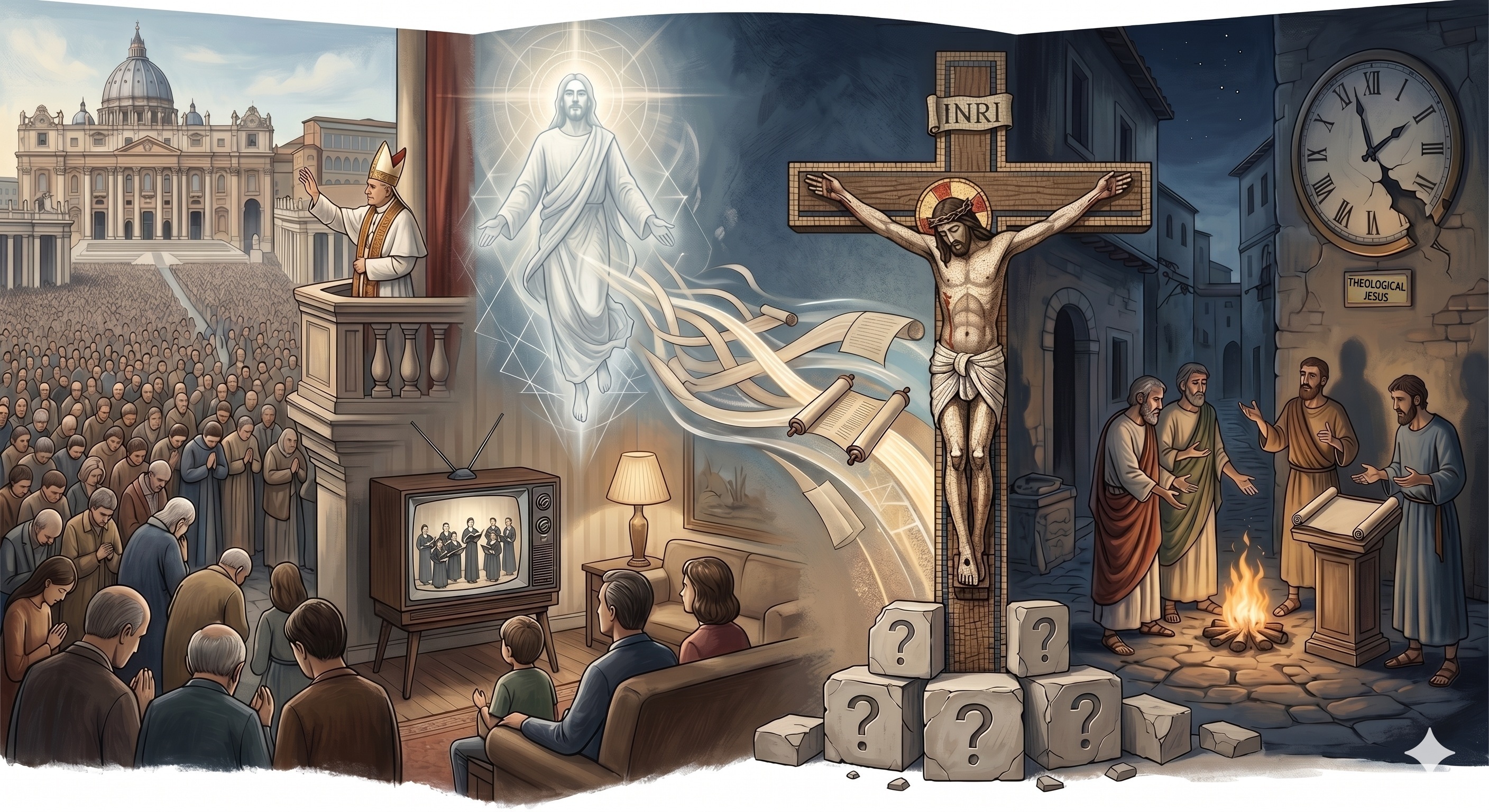
1. The crowds of people in their thousands who swoon to see in person His Holiness The Pope without even reading The Bible, never mind questioning its authenticity!
2. The constant screening by the UK BBC Channel of “Songs of Praise”, non-stop every week since October 1961. I doubt very much if any of those congregations have ever even dreamed of “Questioning the Bible's authenticity” – never mind actually reading The Bible itself!
Apparently the British Broadcasting Corporation are under strict obligation to adhere to a minimum amount of Religious Transmission both on Television and on the Radio. However this cannot be against Religious Scepticism, since during the 1970s the BBC showed a debate between several scholars (the names of which I can no longer remember), where the existence of God was debated – and it was concluded on the debate that God did not exist! When I recently enquired to the BBC to consider showing a sceptical documentary similar to “Jesus: The Evidence” (London Weekend Television, Channel Four, 1984) – the reply I received from the BBC was that it would consider making such a documentary only if sufficient interest was expressed, and until such an occasion arose it would not make it. I remember when the “Jesus: The Evidence” documentary series was shown on Channel Four it hilariously created a scandal in the House of Commons with politicians racing to the defence of religious fundamentalism, that quite clearly generated an amount of ignorance about the history of criticism of Christianity.
Chapter 33. “The First Gospel, ‘Mark’, Was Written Around Or Soon After 70 CE.”
Was it really? Which Christians from 70CE (or soon after) witnessed the Gospel of Mark? It would be quite remarkable if David Lawrence Preston could name even one! Knowledge of the Four Gospels was quite unknown during the first century. They are not mentioned in any Christian works of that period. The author needs to acquaint himself with basic facts.
As for Morton Smith’s “Secret Gospel of Mark” – Morton Smith (died in 1991) was a homosexual with a homosexual agenda relating to Christianity – is that “Gospel” available for public view anywhere, or has it been hermetically sealed away from prying eyes, or at the very least been made available for forensic analysis? You would have thought that the latter – at least – would have been done BEFORE Morton Smith wrote his book! Guy Stroumsa and David Flusser (died in 2000), viewed and photographed the manuscript in 1976 before it was subsequently lost or misplaced sometime after 1990 (funnily enough, after the death of Morton Smith).
As one Theologian from the past (who is now in the Shades of Hades), correctly pointed out on our television screens: “Nobody knows who wrote the Gospels, why they were written, or where they were written” (Ann Loades, “Faith and Fact”, Channel Four Television, 29 April 1984).
Note: While a crucifixion is mentioned in the earliest Christian writings – the Letters of Paul – that earlier version is of a completely different order to the “historical version” found in the much later Gospels. The metaphysical Jesus preceded the “historical” Jesus.
Don't get me wrong, this book was written in “good faith” (if you pardon the pun), but the author is a beginner in this subject matter (at the time of writing his book) without actually knowing it.
|