The Celebration of Christmas
19 December 2025
Updated 20 December 2025
An article by Tim Sigworth in The Daily Telegraph published 17 December 2025 was entitled, “English Heritage admits promoting ‘nonsense’ theory about Christmas”, it was stated that Chris Bride, the historical researcher of Christian Heritage charity, had to resign following his post on X, suggesting that Christians only mark Christ's birth on 25 December because the Roman Empire converted a pagan sun god festival into a Christian celebration.
The Christian celebration of Christmas had nothing to do with the Council of Nicea.
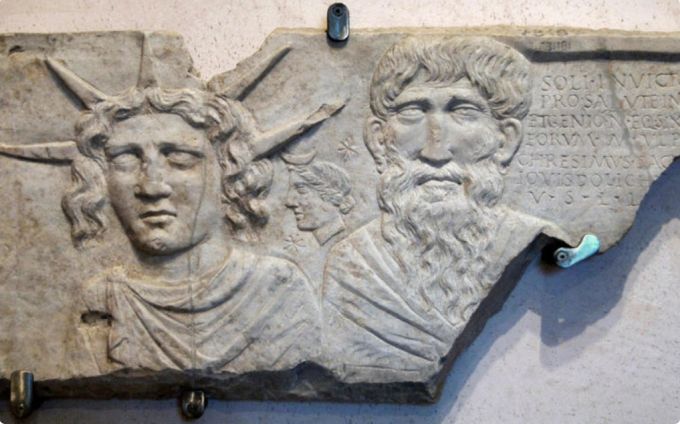
A more detailed explanation is that Christians were celebrating Jesus's birth, with some early records pointing to 25 December as early as the 2nd century (the presumed date of conception being 25 March), before Rome adopted Christianity, but the formal establishment of 25 December as Christmas happened after Constantine legalized Christianity (around 312 AD) and was first officially celebrated in Rome in 336 AD, coinciding with Roman winter festivals like Sol Invictus, possibly for strategic reasons. Early Christians didn't agree on a single date, but the 25 December date gained traction in Rome once Christianity was accepted, blending with existing winter celebrations.
Hippolytus and Julius Africanus linked Jesus' conception to 25 March because they believed it was a date of “sacred symmetry”, holding that Jesus was conceived and died on the same day (25 March, around Passover) to signify the culmination of his life and sacrifice, and then calculated his birth nine months later on 25 December, aligning with the winter solstice as a new “Light of the World”. This “calculation tradition” connected creation, incarnation, crucifixion, and rebirth symbolically, not purely historically.
However, the date of the birth of Jesus Christ was mentioned by two other Christian writers, both contradicting each other. Quoting Andrew McGowan, 10 July, 2025:
“Around 200 CE Tertullian of Carthage reported the calculation that the 14th of Nisan (the day of the crucifixion according to the Gospel of John) in the year Jesus died was equivalent to 25 March in the Roman (solar) calendar. 25 March is, of course, nine months before 25 December; it was later recognized as the Feast of the Annunciation – the commemoration of Jesus’ conception. Thus, Jesus was believed to have been conceived and crucified on the same day of the year. Exactly nine months later, Jesus was born, on 25 December.”
Andrew McGowan also mentions another Christian writer: “... in about 200 C.E., a Christian teacher in Egypt makes reference to the date Jesus was born. According to Clement of Alexandria, several different days had been proposed by various Christian groups. Surprising as it may seem, Clement doesn’t mention 25 December at all. Clement writes: “There are those who have determined not only the year of our Lord’s birth, but also the day; and they say that it took place in the 28th year of Augustus, and in the 25th day of [the Egyptian month] Pachon [May 20 in our calendar] … And treating of His Passion, with very great accuracy, some say that it took place in the 16th year of Tiberius, on the 25th of Phamenoth [March 21]; and others on the 25th of Pharmuthi [April 21] and others say that on the 19th of Pharmuthi [April 15] the Savior suffered. Further, others say that He was born on the 24th or 25th of Pharmuthi [April 20 or 21].”
Andrew McGowan concludes: “Clearly there was great uncertainty, but also a considerable amount of interest, in dating Jesus’ birth in the late second century.”
Andrew McGowan's opening words to his article sums everything up: “But just how did the Christmas festival originate? How did 25 December come to be associated with Jesus’ birthday? The Bible offers few clues: Celebrations of Jesus’ Nativity are not mentioned in the Gospels or Acts; the date is not given, not even the time of year.”
Works
Tertullian of Carthage referenced the event of Jesus' birth and Mary's registration during the census in his work “Against Marcion”, Book 4, Chapter 7, or “Adversus Marcionem” IV.7, in around 200 CE.
Clement of Alexandria mentioned the Feast of the Nativity in his book “Stromata” (“Stromateis” or “Miscellanies”), Book I, Chapter 21; in around 200 CE.
Hippolytus of Rome, mentioned Christmas in his book, “Commentary on Daniel”, around 204 CE. Also in his “Chronicon”, in around 234 or 235 CE.
Julius Africanus, wrote about Christmas in his five-volume work “Chronographiai”, in around 221 CE.
There wasn't a specific Roman treaty that established 25th December as Christmas Day; rather, it was a gradual adoption, formalized in Rome around 336 AD under Emperor Constantine's reign, following his legalization of Christianity in 313 AD. The adoption of Christmas in Byzantium was a result of Christianity becoming dominant after Constantine's era, not part of the city's founding. The Byzantines inherited and adapted Christmas traditions from the wider Roman Empire, gradually shifting from their older Epiphany focus on 6th January to the 25 December date, incorporating aspects of pagan winter festivals into the Christian celebration. Byzantium became Constantinople on 11 May, 330 AD, when Emperor Constantine the Great dedicated the city as the new capital of the Roman Empire, renaming it “Nova Roma” (New Rome) and later Constantinople (City of Constantine).
It also must be noted that the nativity accounts in Matthew and Luke are historically contradictory and have significant differences in details – Magi versus shepherds, census versus Nazareth origin, and flight to Egypt versus temple presentation – leading many scholars to see them as different traditions emphasizing different theological points rather than strict historical chronicles. The birth of Jesus according to the Gospels of Matthew and Luke cannot be reconciled – Jesus Christ could not have been born during Herod's slaughter of the innocents AND the census of Publius Sulpicius Quirinius while he was governor of Syria. Herod the Great was dead by the time of the Census in Bethlehem by Quirinius as claimed by the Gospel of Luke.
|